

 Company News
The closure member of a gate valve is the gate disc. The moving direction of the gate disc is perpendicular to the fluid flow direction. A gate valve can only be fully opened or fully closed; it cannot be used for regulation or throttling.
The gate disc has two sealing surfaces. For the most common wedge‑gate valve, the two sealing surfaces form a wedge shape. The wedge angle varies with valve parameters, normally 5°, and 2°52′ when the medium temperature is relatively low.
The gate disc of a wedge gate valve can be manufactured as an integral unit, known as a rigid gate disc. It can also be made to allow slight deformation to improve manufacturability and compensate for angular deviations of sealing surfaces generated during machining. This type of gate disc is called an elastic gate disc.
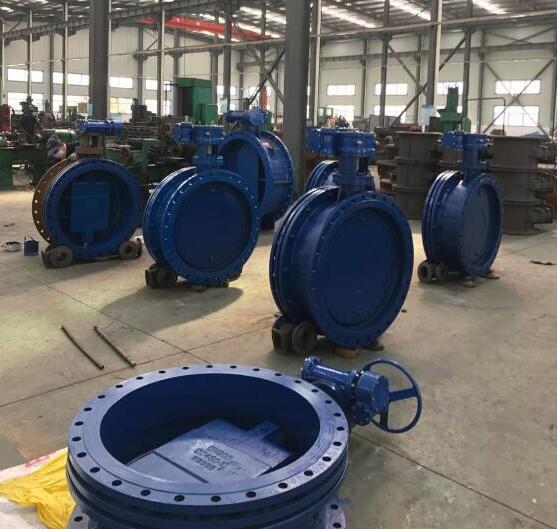
Gate valves can be classified by sealing‑surface configuration into wedge‑gate valves and parallel‑gate valves. Wedge‑gate valves are further divided into single‑gate, double‑gate and elastic‑gate types; parallel‑gate valves include single‑gate and double‑gate variants. Classified by the thread position of the valve stem, they fall into two categories: outside‑screw gate valves and inside‑screw gate valves.
When a gate valve is closed, sealing can be achieved merely by medium pressure. That is, the medium pressure presses the sealing surface of the gate disc against the opposite valve seat to realize sealing, which is known as self‑sealing. Most gate valves adopt forced sealing. When the valve is closed, external force is applied to press the gate disc tightly against the valve seat so as to guarantee sealing performance of the sealing surfaces.
Gate valves in which the gate disc moves linearly together with the valve stem are known as rising‑stem gate valves (also called outside‑screw gate valves). Usually trapezoidal threads are provided on the rising stem. Via the nut on the top of the valve and guide slots on the valve body, rotary motion is converted into linear motion; in other words, operating torque is transformed into operating thrust.
When opening the valve, the fluid passage is fully unobstructed when the lifting height of the gate disc equals the nominal diameter of the valve. However, this position cannot be monitored during operation. In practical service, the uppermost position of the valve stem — the point where it can no longer be opened further — is taken as the fully‑open position. To avoid jamming caused by temperature variation, the stem is normally turned back by 1/2‑1 full turn after reaching the uppermost position, which is regarded as the actual fully‑open position. Therefore, the fully‑open position of the valve is defined by the position (stroke) of the gate disc.
For some gate valves, the valve‑stem nut is fitted on the gate disc. Rotation of the handwheel drives the valve stem to rotate and lift the gate disc. Such valves are termed non‑rising‑stem gate valves, or inside‑screw gate valves.
Advantages of Gate Valves
Low fluid resistance; the sealing surfaces suffer little erosion and corrosion from the medium.
Relatively labor‑saving for opening and closing.
No restriction on medium flow direction; no flow disturbance and no pressure drop.
Simple shape, short face‑to‑face dimension, good manufacturability and wide scope of application.
Disadvantages of Gate Valves
The sealing surfaces are vulnerable to erosion and scratching, making maintenance difficult.
Large overall dimensions; certain space is required for opening, and opening‑closing time is long.
Relatively complex structure.
Notes for Gate Valve Installation and Maintenance
Handwheels, handles and actuators shall not be used for hoisting, and collision is strictly prohibited.
Double‑gate valves shall be installed vertically (valve stem in vertical position with handwheel on top).
For gate valves equipped with bypass valves, open the bypass valve first before opening the main valve to balance pressure difference between inlet and outlet and reduce opening force.
Gate valves with actuators shall be installed in accordance with the product operation manual.
For valves with frequent on‑off operation, lubrication shall be performed at least once a month.
Features of Resilient Seated Gate Valves
Conventional gate valves widely used in the market have long suffered from water leakage and rusting problems. Our resilient seated gate valves are manufactured by adopting high‑end European rubber and valve‑making technologies. They overcome defects of ordinary gate valves such as poor sealing and rusting. Relying on compensation from slight elastic deformation of the resilient gate disc, the valve achieves excellent sealing performance. It features effortless operation, reliable sealing, favorable elastic memory and long service life.



 Chinese
 English